Today, AWS has become the most used cloud service provider among developers. Although there are many reasons behind that, its global infrastructure is the most prominent reason for this success.
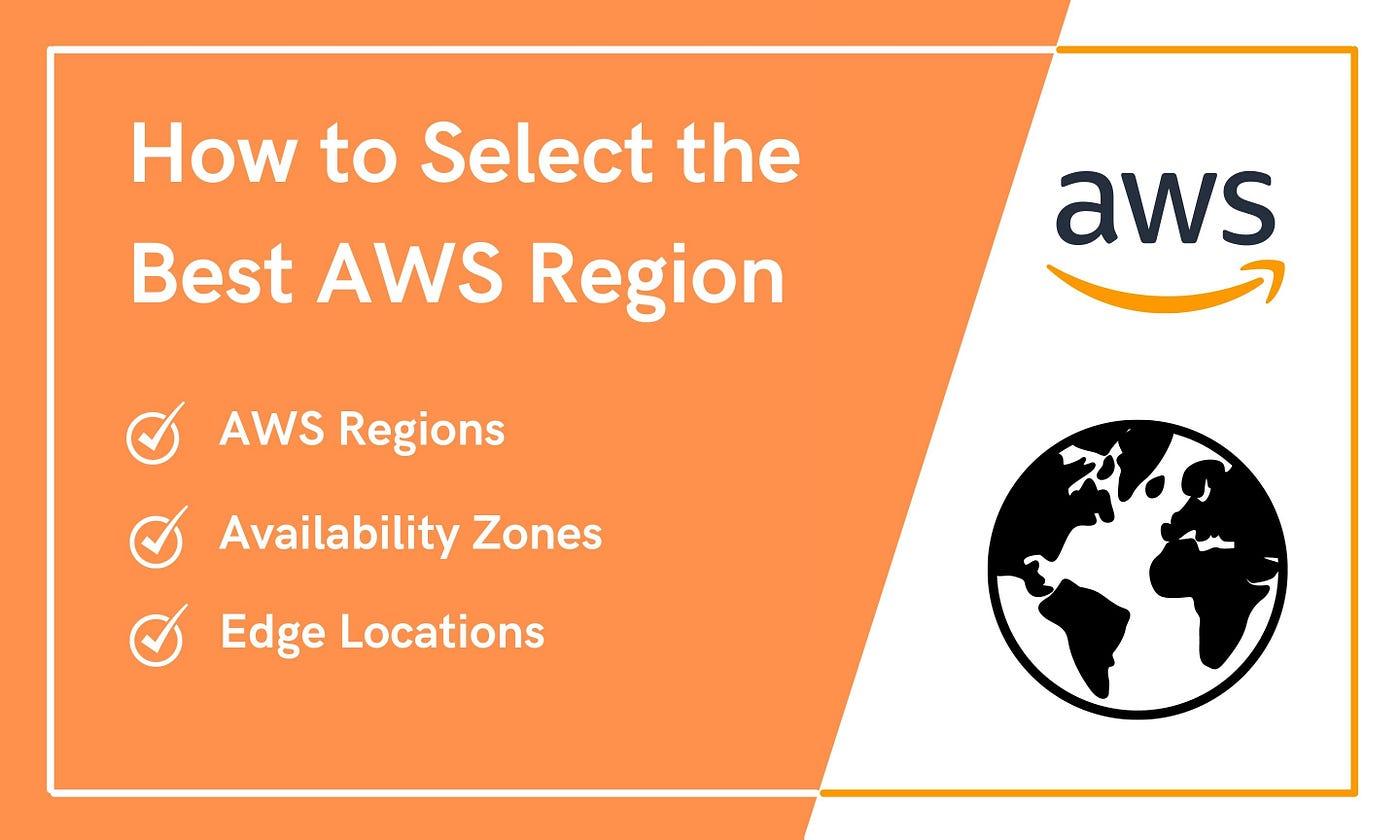
Currently, AWS services are available in 25 different regions with 80+ availability zones and 200+ edge locations.
So, in this article, I will discuss the global infrastructure of AWS and what we should consider when selecting an AWS region.
How to select the best AWS Region for you?
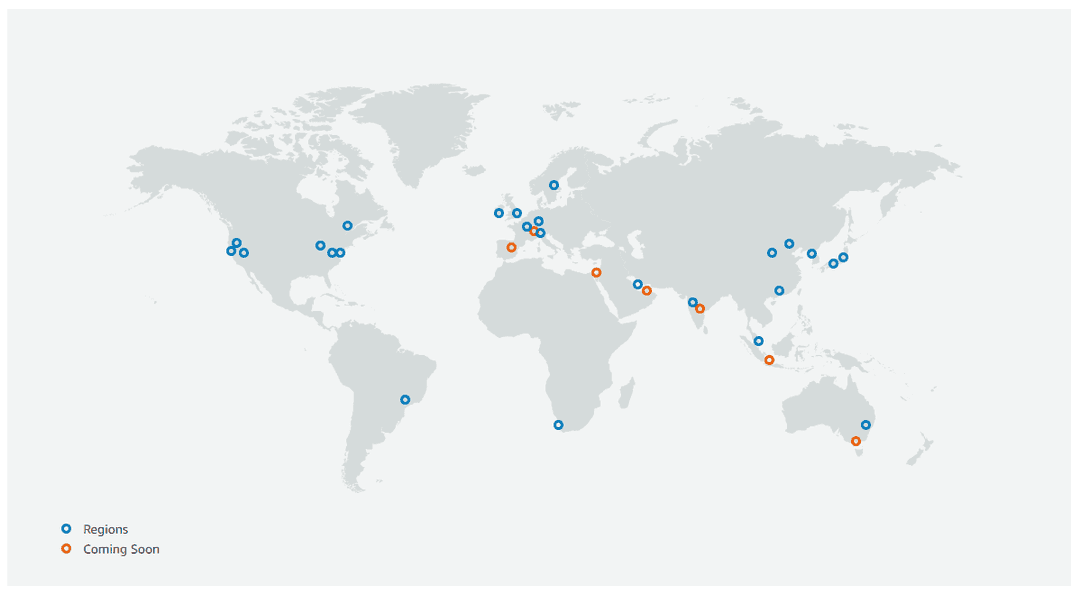
AWS region is a cluster of data centers, and these regions are available all around the world.
Each region has a unique identifier like us-east-1 (North Virginia), ap-south-1 (Mumbai), and you can find the list of regions from the top right corner of your account.
These regions are interconnected through a private network, and each region has its own set of isolated and physically separated availability zones (AZs) and edge locations (Els).
Before discussing AZs and ELs, let’s see what you need to consider when choosing an AWS region for your project.
1. Service Availability
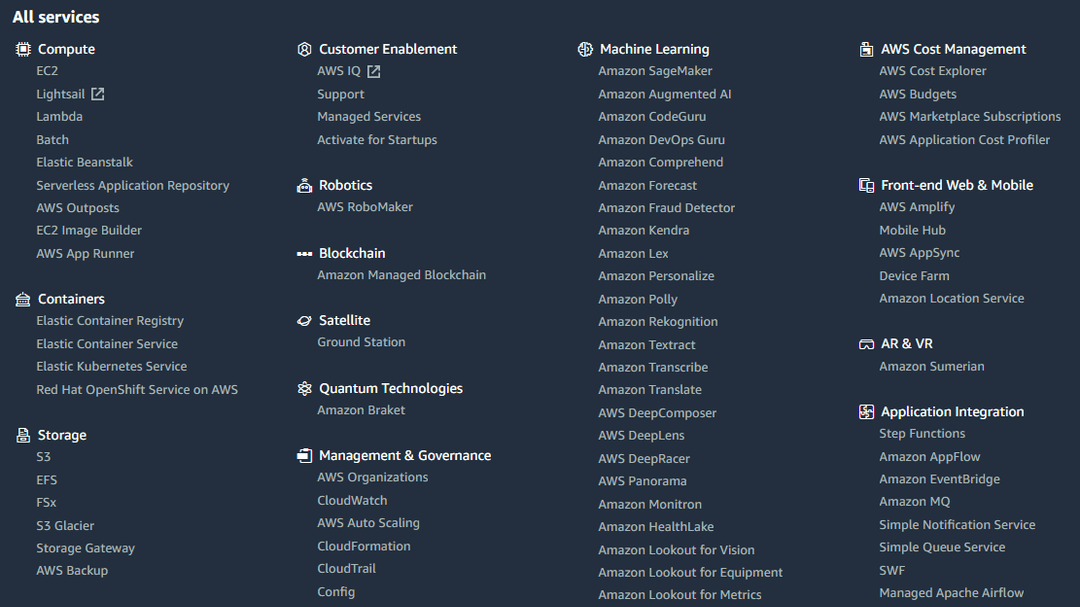
Services provided by AWS are growing rapidly day by day. But not all the services are available in all regions.
Mostly this unavailability is caused when a service is new. This is because AWS takes some time to test the services in selected regions before rolling them out to all regions.
For example, if you compare US East (N. Virginia) region and Africa (Cape Town) region, there are significant changes in available changes. You can find all the services and their available regions here.
Also, using a service in one region doesn’t mean using the same service in another region. Despite being available in all regions, most AWS services are region-specific.
For example, if you are using the EC2 service in 2 regions, you have to pay for both Ec2 instances in both regions. However, there are services like S3, IAM which are available as global services.
2. Cost
As we all know, AWS charges for their services based on usage. But these charging rates are not the same for all regions.

Based on the region you select, you could end up paying almost twice as you should.
For example, if we compare EC2 prices in us-east-1 (N. Virginia) and se-east-1 (São Paulo), the same EC2 instance will cost 64.54 USD in us-east-1 and 95.64 USD in se-east-1 .
AWS Lambda has the most consistent pricing ranges across all regions and Sao Paulo is recognized as the most expensive AWS region.
You can use the AWS price calculator to calculate service prices in different regions.
3. Legal Requirements
Legal requirements and data protection policies of your clients is another important aspect you need to consider when choosing an AWS region.

Especially when it comes to applications with sensitive data like health records, financials, and security, most countries have laws and regulations to keep them within the country.
So, if your application has such requirements, you should always comply with general laws and choose the appropriate region regardless of any other factors.
4. Geographical Distance
User experience is a crucial aspect of modern web applications, and reducing the latency of applications is a great way to improve the user experience.
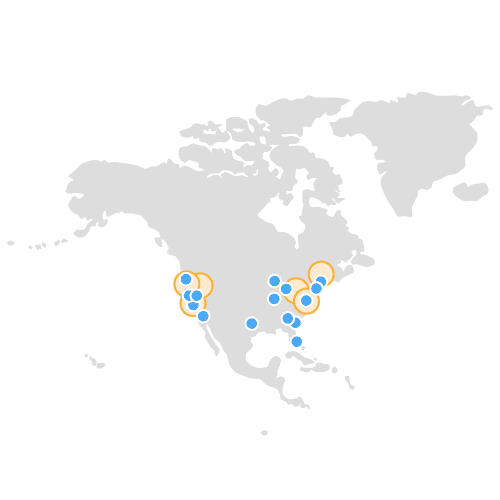
When it comes to AWS regions, you should always select a close region to the geographic location your application operates.
For example, if you target an audience in Asia, you need to select an AWS region from the Asia Pacific region.
Also, if your application targets a global audience, you can launch your services in multiple regions to improve the latency.
Since now you understand AWS regions and what needs to be considered when choosing, let’s see what availability zones and edge locations do.
Availability Zones & Edge Locations
As I initially mentioned, each AWS region consists of multiple availability zones. Usually, the number of availability zones is between 2 and 6.
A single availability zone consists of one or more data centers.
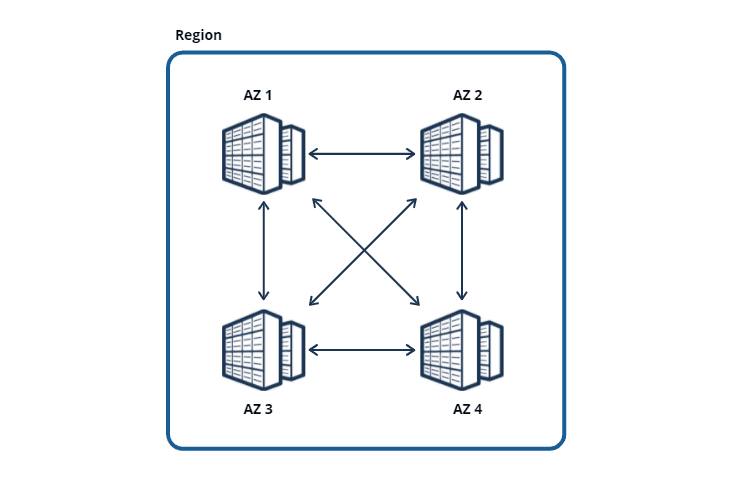
These data centers improve the availability of AWS services, and since they are physically separated from each other, they are isolated from disasters.
Edge locations are also a type of datacenter, But they are optimized to cache content for improved static content delivery.
Edge locations do not handle any computations; they are just stored and used in AWS CloudFront to distribute content with minimum latency.
Now you have a good understanding of what needs to be considered when you are choosing an AWS region for your next project. Don’t forget to share your thoughts in the comments section as well.
Thank you for Reading !!!
Learn More
- Asynchronous Request Handling with AWS SQS by Chameera Dulanga
Asynchronous Request Handling with AWS SQS
How AWS SQS Makes Request Handling Easyenlear.academy
- AWS CDK — A Beginner’s Guide with Examples by Manoj Fernando
- Web Hosting with AWS by Sahan Amarsha
Web Hosting with AWS
Hands on tutorial with AWS hosting services. enlear.academy